
Curiosity and Empathy: Antidotes for Bias
Maybe the seconds we give people to make a first impression aren't enough.

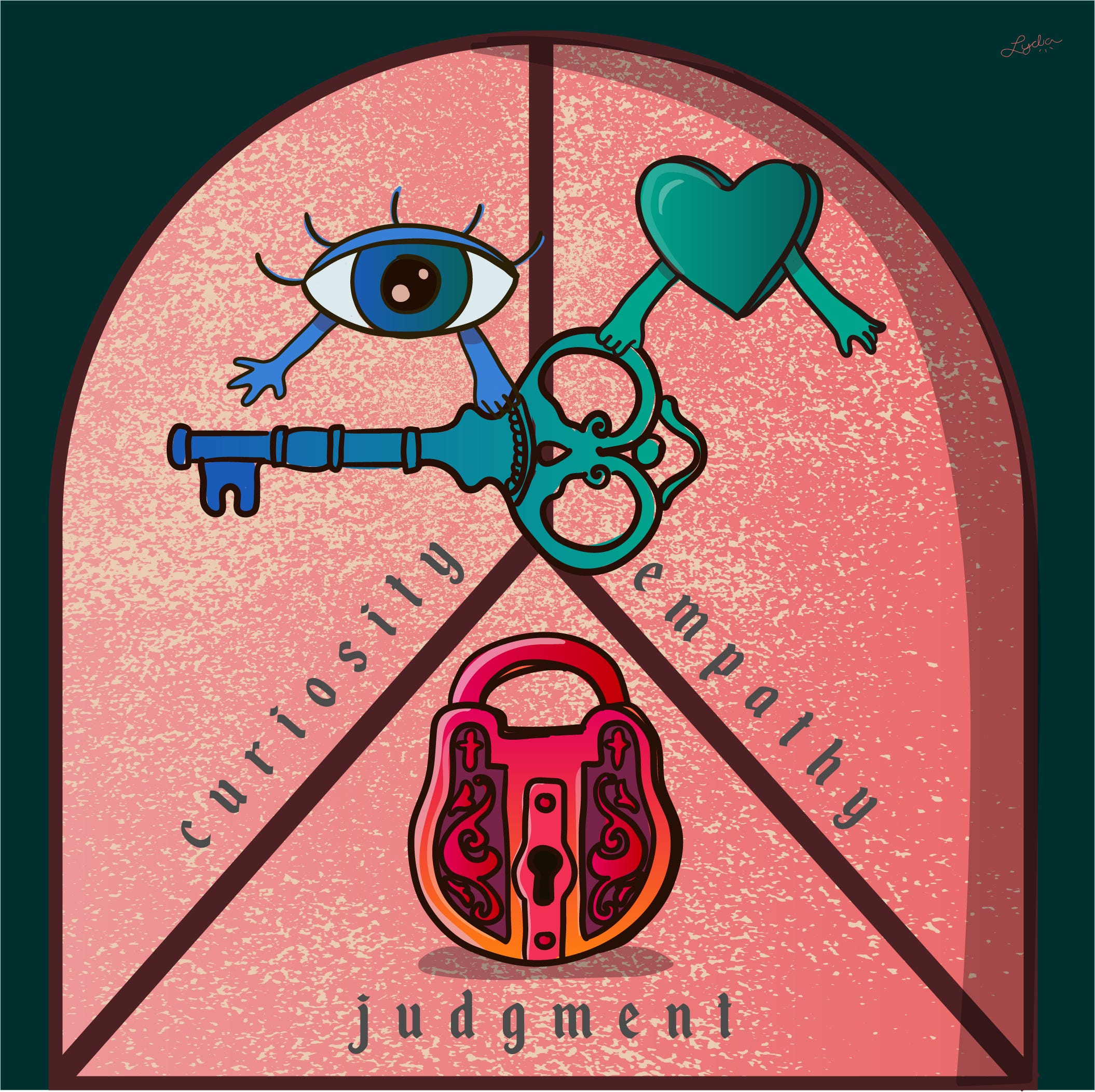
Pictured above: How I visualise the relationship between curiosity, empathy and judgment
Word count: 1344
Buckle up! Let’s explore:
The problem with modern relationship forming
The role of curiosity
How first impressions interrupt curiosity
The problem
What can we do to help ourselves?
The Problem
Relying too heavily on first impressions means bias over shrinks our social circles and contributes to social isolation which is a huge problem in today’s society.
Curiosity In Relationships
Humans have relied on curiosity for millennia for progress. It has an expanding quality. In relationships it’s the key that opens the door to understanding people.
Psychologists like Daniel Berlyne explain how curiosity is not merely an impulse. It’s much more primal, just like hunger. This indicates just how important it is …how big of a role curiosity plays in life.
Once curiosity leaves, need to interact further is gone. The more curious we stay, the more time we give someone and the more likely we are to explore people who are not like us.
First Impressions
According to mainstream psychology we use first impressions to answer two pressing questions:
does this person have good intentions?
can I trust them to carry them out?
But we end up concluding so much more than this! We build entire identities from a first impression.
In his Social Identity Theory (published 1978), psychologist Henri Tajfel said modern humans use identity to bolster self-esteem by identifying with “in-groups” and differentiating from “out-groups”.
Heuristic judgments might have been useful at some point. Perhaps when we first started moving into larger communities, and lost the luxury of getting to know everyone intimately. Perhaps back when identity a simple matter of man / woman, rich / poor, gay / straight.
Here’s a perfect example in a Facebook post I saw yesterday:
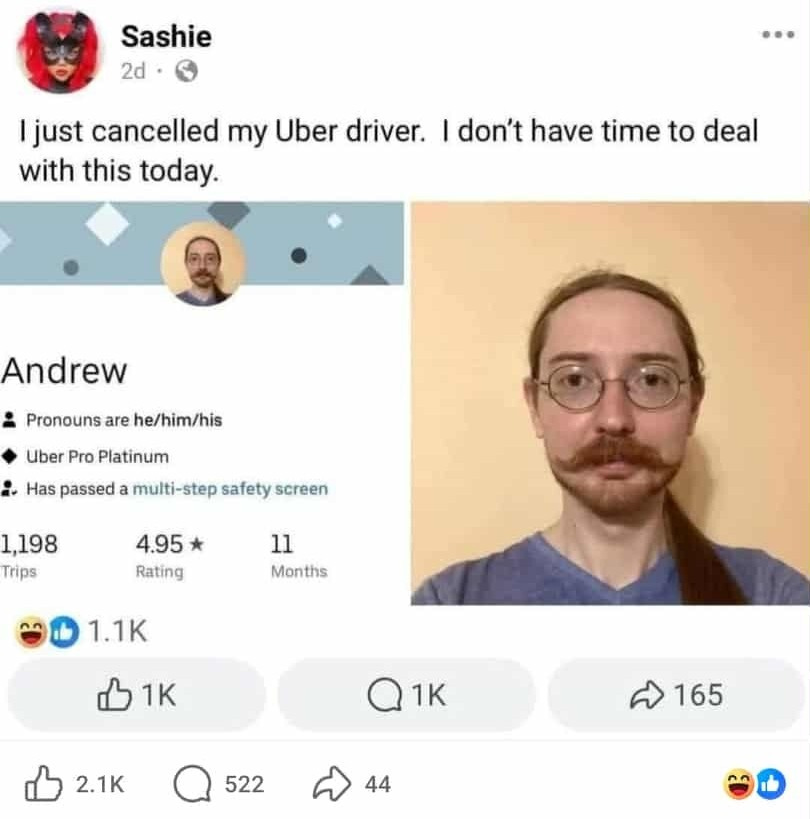
Pictured Above: This facebook post is a perfect example of what it means to rely too much on first impressions.
Today identity is extremely nuanced and complex — yours included. Thanks to the internet, each year new groups are formed stormed and normed… identity is not even solid anymore, but fluid and changing.
The Problem With Snap Judgments
Two studies done in 2006 measured it takes us less than a second to make a first impression: 10 milliseconds (Willis & Todorov, 2006) and 39 milliseconds (Bar et al 2006). That’s crazy. We call this “intuition” or “gut instinct.” It’s actually bias.
The speed of first impressions means we are relying on bias. Relying on bias comes with a number of problems.
It is inaccurate. Bias is too rudimentary for deciphering the complexity of identity we see today. Despite an abundance of confidence that intuition is pure, trustworthy and accurate, we really don’t know. Sometimes we see want we want to see. I’m not saying intuition isn’t necessarily all wrong, but if we don’t know how accurate it is maybe we should be more careful to rely on it.
It’s dangerous. Preferring what’s safe is not always harmless but if we’re not watchful, bias can become a gateway to darker social interactions: favouritism, prejudice, stereotyping and even racism. Is it really ok to stick with those who are similar and feel safe? The more I think about it, the more uneasy I feel.
It’s puts us in a position to be deceived. We didn’t expect that in 2025 deception would be monetized. We are constantly deceived by appearances online. Many have mastered the art of using first impressions to manipulate. Sensationalist news outlets, clickbait, ragebait, fake product reviews, lobbyists in disguise as health professionals and now AI….
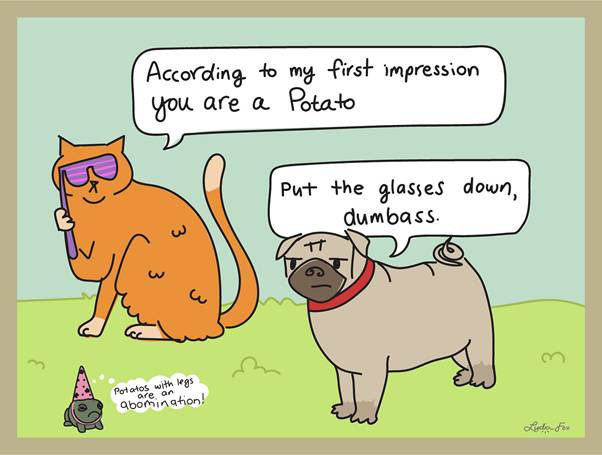
Pictured Above: How first impressions work online.
Somewhere along the line we swapped truth for efficiency. Content to get it oh so wrong.
IT’S NOT WORKING.
The Cost of Getting it Wrong
Let’s return curiosity. No curiosity = no progress. No self-expansion. Our go-to methods for choosing modern day relationships are a death sentence for curiosity.
If you thought you were harmlessly seeking safety in the familiar, now you know the truth.
The more we rely on instinct, the more we tighten the fenceline around our own groups, the less we grow and the more we alienate ourselves from the rest of society.
Carl Jung said,
“Everything that irritates us about others can lead us to an understanding of ourselves.”
Maybe the only way to find our true “self” is to let relationships that fall outside our circle of familiarity live long enough to reveal something new.
Maybe identity grown in comfort becomes stunted. Maybe we never fully mature until we are stretched beyond the confines of the familiar and safe.
If you only ever try on the colour blue, how will you ever know if you also love red, orange, purple, green and yellow? Ask yourself: is bias killing my curiosity before it does its job?
Why You Should Care
It’s not my place to make you care but you should know that the less we care about social issues, the more isolated and individualised (and boring) society becomes. Our actions don’t just impact us. Whether we like it or not, we contribute to what kind of society future humans live in.
Rant over.
The Case to Stay Curious A Little Longer
So we’ve established we need to adapt. Relying on first impressions isn’t working. Here’s what I suggest:
Know the true cost of bias
Don’t stop at a First Impression, give a Second or Third
Add a touch of empathy - it extends curiosity
Truthfully autism rescued me from the problem of “out” and “in” groups. Most women who look like me are not my safe group at all. Having highly sophisticated “instincts” women immediately sense my childlike-ness and swiftly (but gently) retreat. The result is no safe circles and with no safe circles, only the kindest hearts seem to find me! That’s a blessing, not a curse!
There are also many other groups who go overlooked by society: people with dual citizenships, foreigners, anyone who looks a bit different, the diabled, the older. Older people can enrich our life with stories!
By the way have you read Carlos Saint’s substack? He writes about how being French and American means he fits in with neither group. I wonder if people stayed curious a little longer whether his story would be written different?
How Empathy Extends Curiosity
Researchers studying empathy have seen how it can literally reopen information-seeking behaviour in the brain. (Ramsøy et al., 2015; Sherman et al., 2020 and Nazir and Lin, 2024).
By tapping into empathy we can literally reignite curiosity. This means less reliance on heuristic judgments and a widening of our “in” circles.
I’m not suggesting you try to be everyone’s friend. I’m suggesting that without empathy, curiosity is too short lived to even know who is a friend.
Holding a little empathy is not about being self-sacrificing. It is herd survival. It’s a useful strategy beyond lazy individualism. It wisely says:
“I don’t know everything yet! I’ll continue to seek the truth.”
Conclusion
For those concerned with truth and progress: when curiosity dies after a first impression, try holding a little empathy to give curiosity a second breath.
Side note: It’s worth being aware that not everyone you hold space for has the capacity to return it. Disappointment enters through the same door as opportunity. I’m calling out for a little courage!
One thing is for sure; those of us who choose to live curiously experience life very differently. More richly. Less comfortably. But we are all the better for it.
Thanks for reading.
Lyd
References
Bar M, Neta M, Linz H. Very first impressions. Emotion. 2006 May;6(2):269-78. doi: 10.1037/1528-3542.6.2.269. PMID: 16768559.
Nazir, Cassini & Lin, Meah. (2023). Beyond empathy: how curiosity promotes greater care. 10.26530/9789401496476-115.
Ramsøy TZ, Skov M, Macoveanu J, Siebner HR, Fosgaard TR. Empathy as a neuropsychological heuristic in social decision-making. Soc Neurosci. 2015 Apr;10(2):179-91.
Sherman, A., Cupo, L., & Mithlo, N. M. (2020). Perspective-taking increases emotionality and empathy but does not reduce harmful biases against American Indians: Converging evidence from the museum and lab. PLOS ONE. https://doi.org/10.1371/journal.pone.0228784
Tajfel, H. (1974). Social identity and intergroup behaviour. Social Science Information, 13(2), 65-93. https://doi.org/10.1177/053901847401300204 (Original work published 1974)
Willis J, Todorov A. First impressions: making up your mind after a 100-ms exposure to a face. Psychol Sci. 2006 Jul;17(7):592-8. doi: 10.1111/j.1467-9280.2006.01750.x. PMID: 16866745.
Thanks for the shoutout!
My first and strongest reaction is about that uber driver screenshot. Bragging about your own stupidity is a weird flex!
I 100% agree with all of this. Walking through life with an open mind and an open heart is the best way to grow.
Everyone we meet has something to teach us. And we have something to teach them.
I love this article. Thank you for sharing.
I see it like this:
Curiosity needs oxygen.
Bias is the chokehold.
Empathy is the oxygen mask–use it when curiosity starts fading.